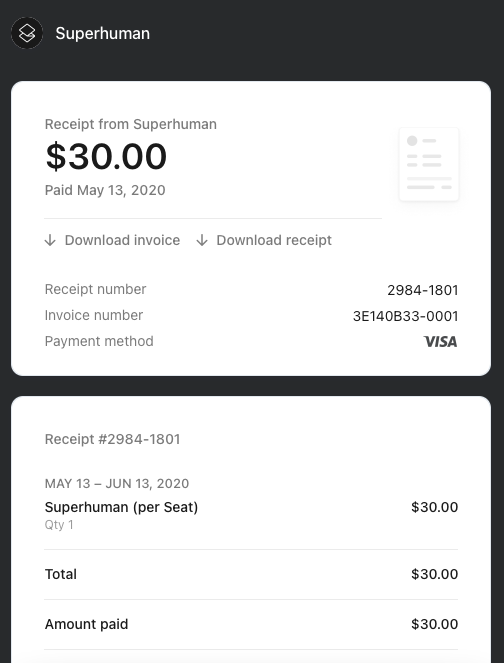
I’ve now been using Superhuman for over six years with a receipt to prove it.
How has my opinion of the best email client with a wait list of over 450,000 people evolved over time?
Superhuman supports the following inbox providers:
- Outlook
- Gmail
And they have apps for every device:
- Mac
- Windows
- iPhone
- Android
Superhuman is my desert island app – if I could only pay for one software tool for the rest of my life, this is it.
Their shortcuts, user interface, and pace of updates (very frequent) are still best in class (view their changelog here).
Before Superhuman launched their AI product, my favorite feature launch was the Calendar integration.
So when you type a date or day of the week it shows your schedule for that exact day.
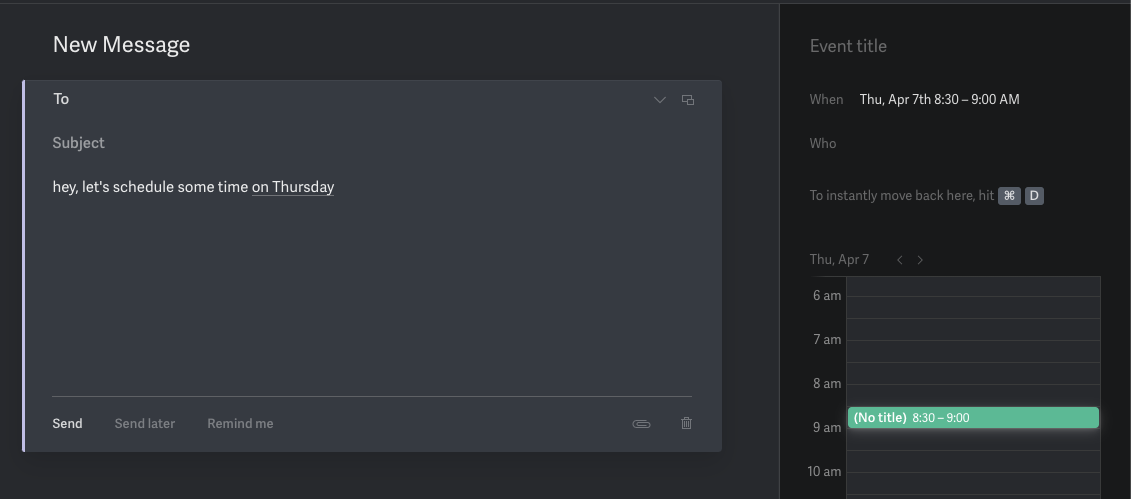
They’ve improved calendar over time but I’d love to see them adopt some of Calendly’s features like sharing my calendar availability with a link.
Overall I’m still happy with Superhuman.
Their latest AI features are really interesting, I’ll cover them in a below section.
There is not a better email client out there right now, even after six years of daily use.
The Grammarly Acquisition
On June 30, 2025, Grammarly acquired Superhuman. It was a big deal in the productivity software world.
Superhuman is now part of Grammarly’s product suite alongside Grammarly (writing assistant), Coda (documents), and Go (a newer product). Email features are branded as “Mail” on Grammarly’s pricing page, but the app itself is still called Superhuman.
What changed with pricing? This is the biggest impact for new users. Superhuman used to be a simple $30/month standalone product. Now it’s bundled into Grammarly’s tiered pricing:
| Plan | Monthly Price | Annual Price | Includes Email? |
|---|---|---|---|
| Free | $0 | $0 | No |
| Pro | $30/mo | $12/mo | No |
| Business | $40/mo | $33/mo | Yes (Mail + CRM integrations) |
| Enterprise | Custom | Custom | Yes (+ admin controls) |
New users who want Superhuman’s email features need the Business plan at $33/month (annual) or $40/month if paid monthly. You also get Grammarly’s writing AI, Coda, and CRM integrations with HubSpot, Salesforce, and Pipedrive — so there’s more bundled value.
I’m grandfathered at my original $30/month rate, which I’m grateful for.
Does it still feel like Superhuman? Yes, 100%. The app looks the same, the shortcuts work the same, and the speed is unchanged. If you didn’t read the news, you wouldn’t know anything happened.
There’s an interesting parallel in Rahul Vohra’s career here. He co-founded Rapportive and sold it to LinkedIn in 2012. Now he’s sold Superhuman to Grammarly in 2025. Both were email-adjacent products acquired by larger platforms — it’s a pattern that clearly works.
What Is Superhuman?
Superhuman is the fastest email experience ever made. No other app I use on a daily basis is more thoughtfully and beautifully designed.
Since the Grammarly acquisition, Superhuman’s pricing has changed significantly. It used to be a straightforward $30/month. Now, new users need a Grammarly Business plan ($33/month annual, $40/month monthly) to access email features. The Free and Pro tiers include Grammarly’s writing tools and Coda, but not email.
That said, if you value your time and email is a core part of your work, the Business plan is arguably better value — you get Superhuman’s email client plus Grammarly’s writing AI, Coda for docs, and CRM integrations.
Who would be crazy enough to pay for a premium email client?
👋 Hi. My name is Nick and I’ve been paying for Superhuman since 2020.
Why? Well, let’s talk about it.
Superhuman AI
On July 20th 2023 Superhuman launched their AI features on Product Hunt, making them generally available to all customers.
What is Superhuman AI? With Superhuman AI you can:
- 🗯️ Turn an idea into an email
- ⚡ Reply in an instant
- 💎 Polish your writing
- 📖 Summarize long conversations
And on November 15th 2023 they launched Auto Summarize which is probably my favorite AI feature so far.
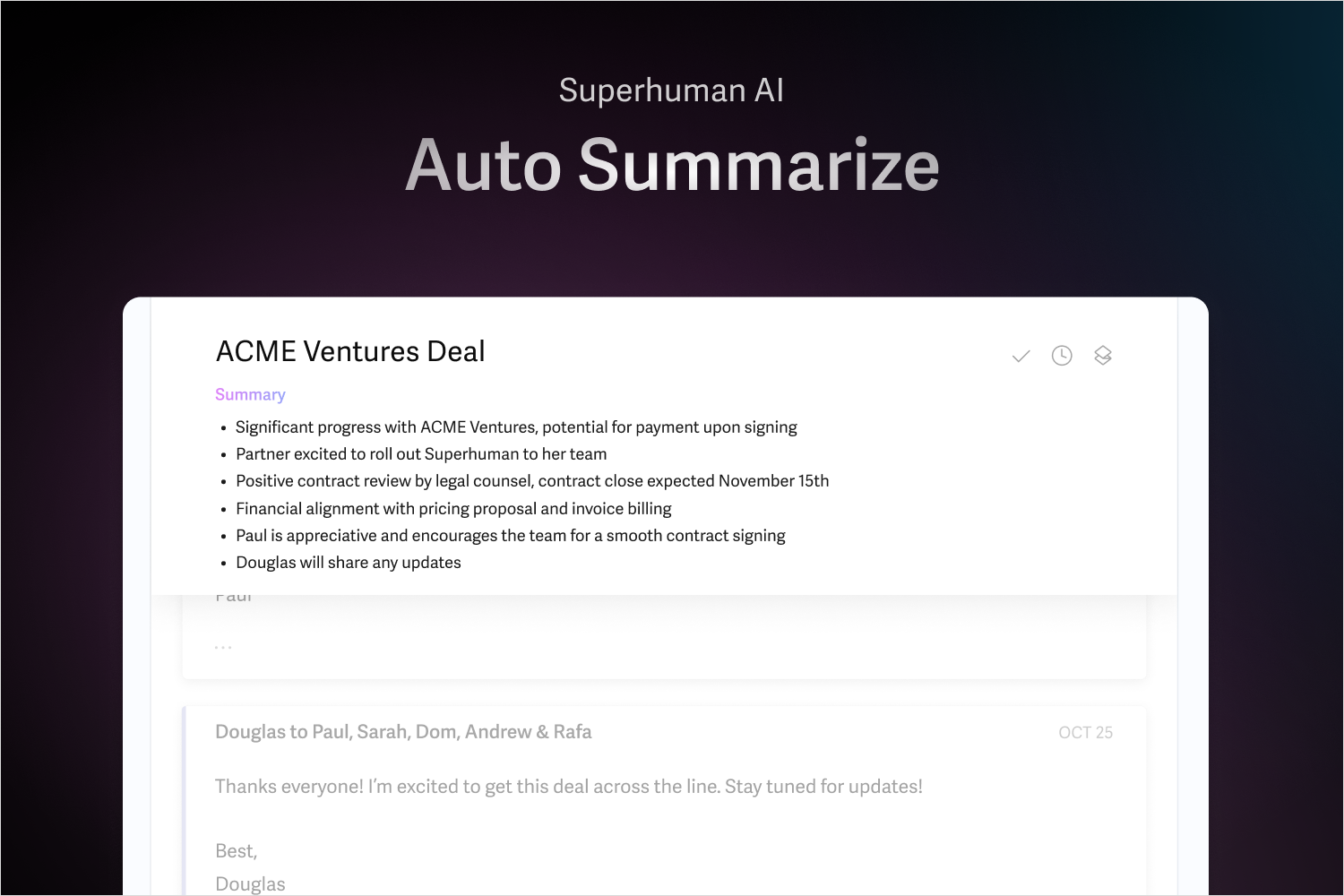
Like the name suggests, it automatically summarizes the email thead you have open in a short sentence.
If you want more context then just hit M on your keyboard and it displays a list of bullet points in chronological order.
I use this all the time in my freelance work to make sure I didn’t miss anything from my clients.
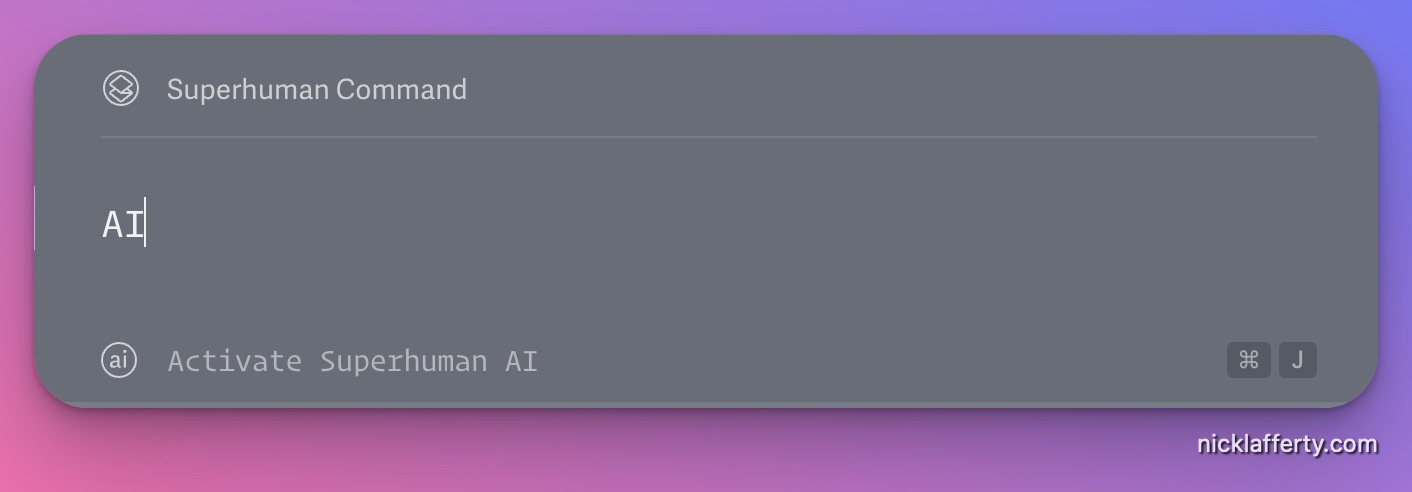
But I got ahead of myself, here’s how you first setup Superhuman AI.
Open the command center with Cmd+K
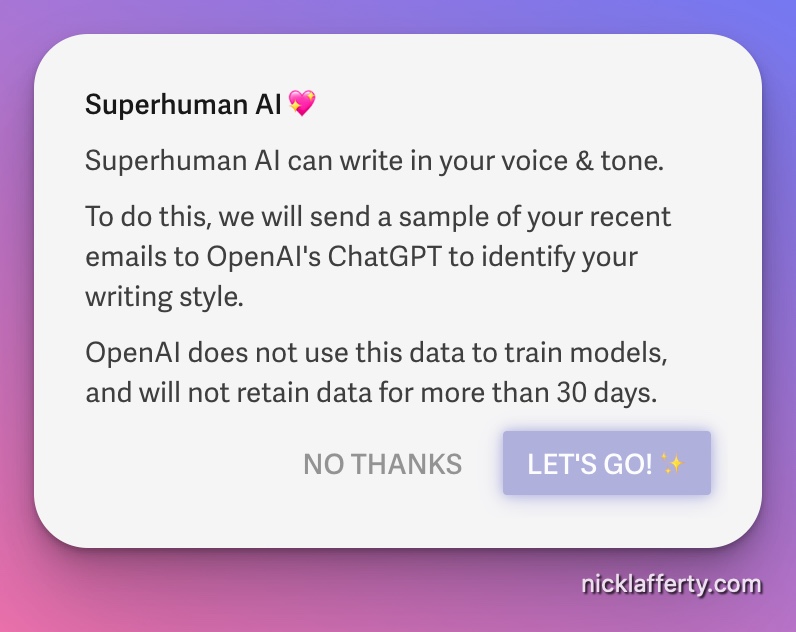
Allow Superhuman to send some of your emails to OpenAI. The data is not stored for more than 30 days and is not used to train their models.
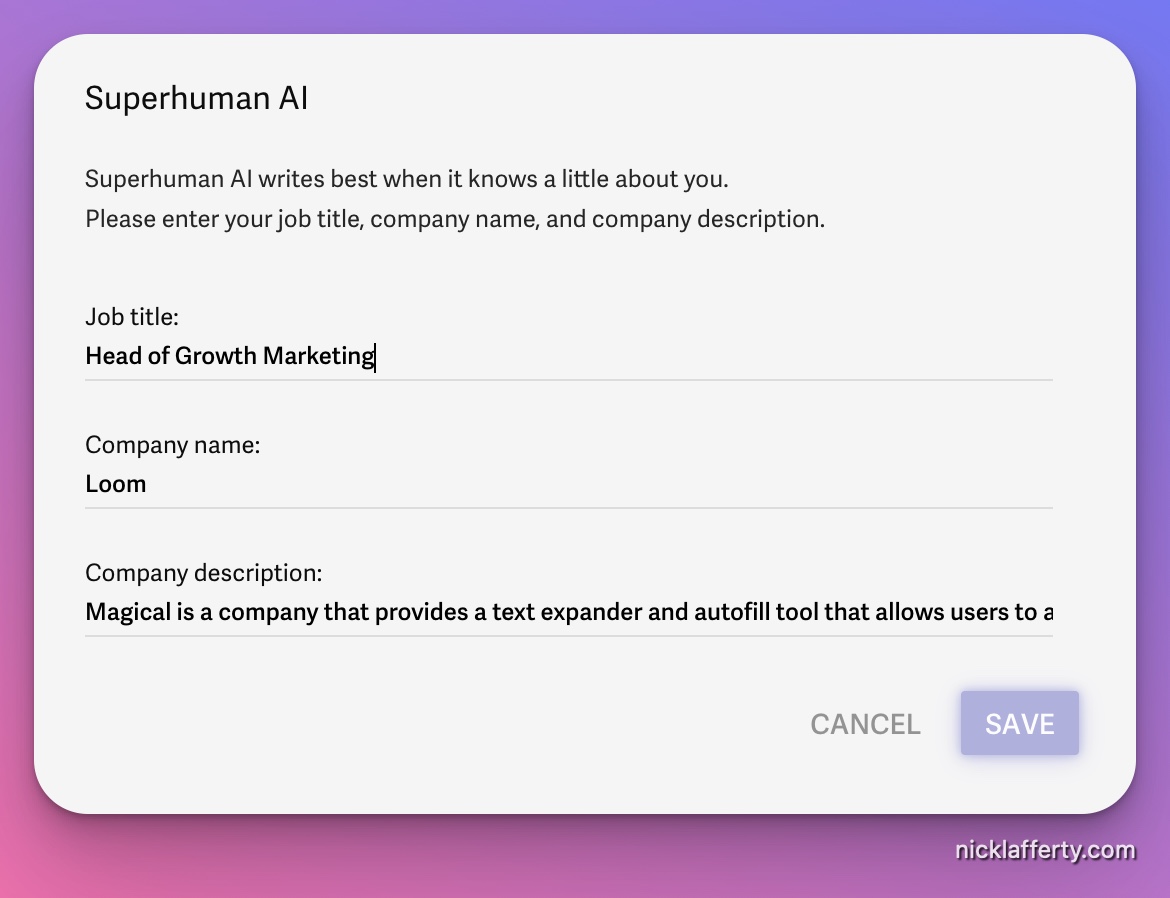
Give Superhuman some more details about you, like your job title, company you work for, and your job description.
That’s it! Superhuman will train the AI on your emails in the background. It took about 5 minutes for me.
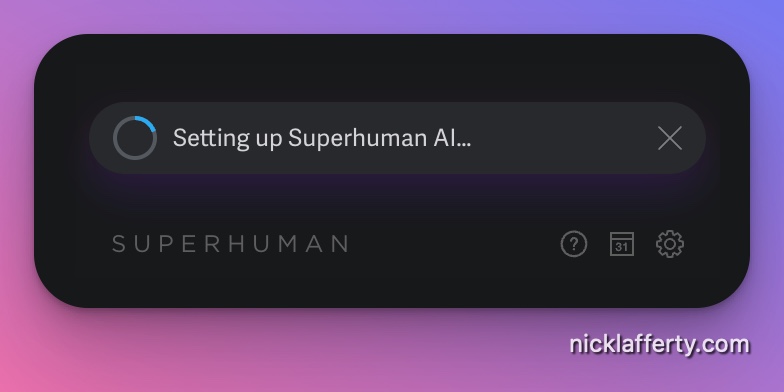
To use Superhuman AI, open up a new email draft and press Cmd+J
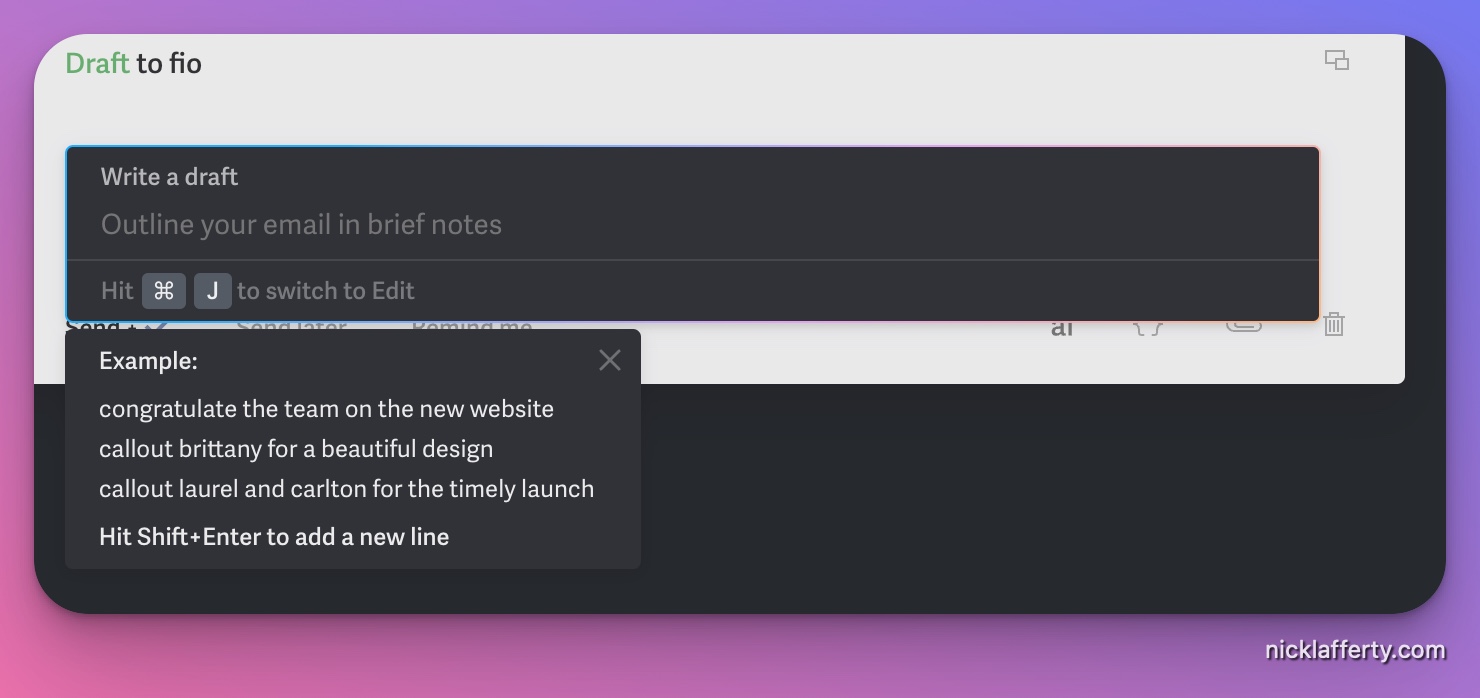
You give the AI a prompt or a short description with what you want to write and it does the rest.
After you get a response back, Superhuman gives you some default options to improve the output:
- Shorten
- Lengthen
- Simplify
- Improve grammar
- Write in my voice
Here’s an email it wrote for me as a response to my friend, Fio.
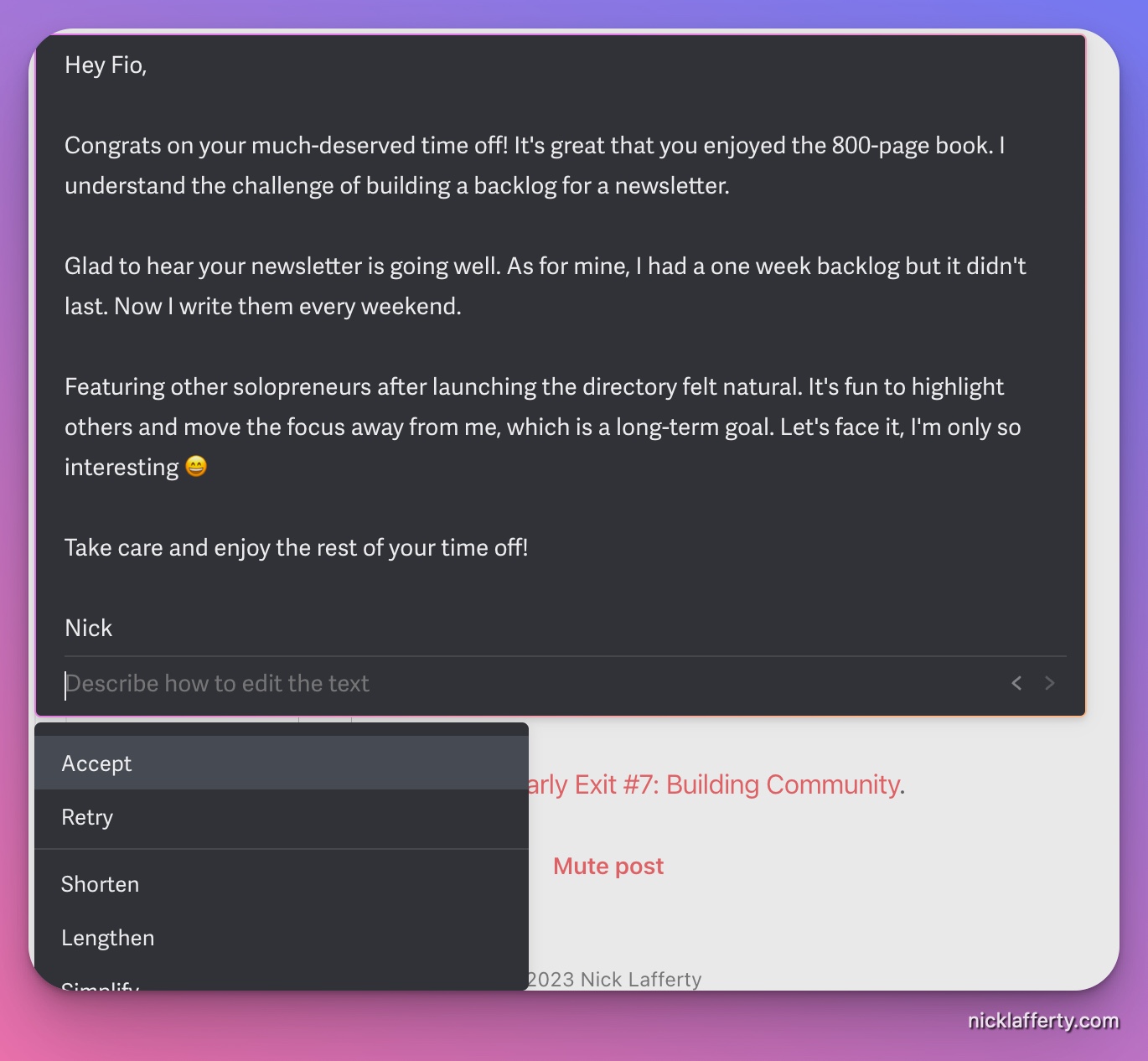
Pretty good! I had it rewrite in my voice and shorten and simplify the prompt. It would be great if Superhuman could learn how to do that by default so I wouldn’t have to do it every time.
My emails are very casual and short, and I feel like Superhuman can help punch up my emails even further now while also having them take less time.
Sometimes I get anxiety about responding to emails and using the AI to quickly write up a draft I can polish will really help me.
Superhuman AI in 2024-2025
Since the initial AI launch, Superhuman has shipped several major AI upgrades:
- Instant Reply: AI-suggested replies appear at the bottom of every email, letting you respond in one click. It’s faster than Smart Reply in Gmail and the suggestions are more contextually relevant.
- Ask AI: Ask natural language questions about your email threads — like “what was the deadline they mentioned?” or “summarize the action items.” Super useful for long threads.
- Improved voice matching: The AI has gotten noticeably better at writing in my voice over time. It used to sound generic, now it actually sounds like me.
With the Grammarly acquisition, there’s a natural connection between Superhuman’s email AI and Grammarly’s writing AI. All Grammarly plans now include Grammarly’s writing assistant, so even the email drafting experience benefits from that integration. It’s easy to see why Grammarly wanted Superhuman — combining best-in-class email with best-in-class writing AI is a powerful combo.
Background
Superhuman was founded by Rahul Vohra, who co-founded and sold Rapportive to LinkedIn for a reported $15 million in 2012.
Rapportive was a Gmail extension that added relevant social media details on the person you were emailing, directly within your inbox.
No surprise then that Superhuman has Rapportive-like features inside it.
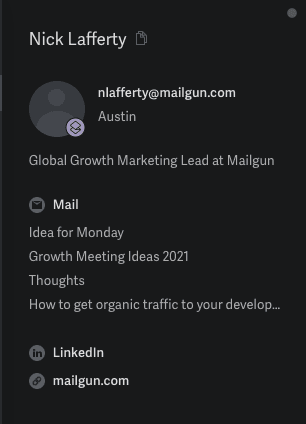
Superhuman is aimed at working professionals looking to streamline their workflows to be more efficient at their jobs.
Before the acquisition, Superhuman had raised over $100 million in venture funding. The company famously used its massive wait list — over 450,000 people at its peak — to prove market demand instead of relying on monthly active user counts like most startups.
While Superhuman no longer has a wait list (you can sign up through Grammarly now), that wait list was a massive growth driver in the early days and helped build the brand’s exclusivity.
Superhuman is fantastic and entirely worth paying for. It is the best email client I have ever used.
Getting A Superhuman Invite
Looking for a Superhuman invite? Click here for one month free.
Snagging an invite to Superhuman wasn’t easy at first. I was on the wait list for 3 years, from 2017 until 2020, and I was honestly invited by pure chance.
One of my blog readers uses Superhuman and saw I was on the list. He graciously extended me an invite, but not before warning me about it’s $30/month cost again.
I accepted, and soon I was connected with my onboarding specialist, Michael.
Before Michael could setup our concierge onboarding session where he would walk me through all the features of Superhuman over a 30-minute Zoom call, I first had to fill out a survey of how I currently used email.
The survey asked questions like where I work, what devices and apps I use for email, and how much time I use email every day. Most of the questions are geared around work-related emails, but in my onboarding call we covered both my work and personal accounts.
A few questions later, and after taking my credit card info to ensure I was good for the money, my consultation was scheduled. I was encouraged to download Superhuman ahead of time, but my access wouldn’t be turned on until then.
It’s been a few years since I went through their onboarding process so this might have changed!
Superhuman’s Concierge Onboarding
This is worth the price of admission (and honestly it’s free if you do it in your first 30 days).
Superhuman employees a literal team of email experts who will help you unclutter your (likely messy) inbox.
I carved out 30 minutes of my workday at lunchtime for my white-glove, concierge onboarding with Michael from Superhuman. I was feeling a mixture of excitement and bewilderment. How was I going to explain a $30 charge on the credit card to my wife for email software.
I could already imagine the conversation in my head. Does it do anything special besides help you send email?
Well, yes, and no.
Superhuman doesn’t do any of the actual email sending. It connects to your email account, Gmail in my case, and acts as a really pretty, efficient, and shortcut-rich frontend.
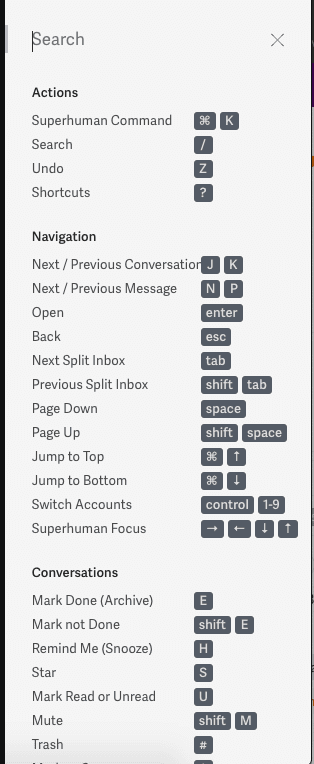
Speaking of keyboard shortcuts, you get walked through all of the most popular ones during the onboarding call.
Here’s a screenshot of the Superhuman shortcuts.
My session with Michael started out with him covering my responses to the survey. Then he asked me to share my screen and he walked me through setting up Superhuman for the first time.
The experience was unlike anything I’ve ever had with a piece of software before.
Never before has a real human walked me through my first 30 minutes using new software. Michael’s job, partially scripted as I’m sure he covers the same topics and shortcuts with almost everyone, was to make sure I fully understood the features and shortcuts within Superhuman.
Before we move on, a short note about a few key metrics that SaaS companies track:
- Sign-ups: Users that sign-up for the product.
- Paying users: People who paid you money. Many SaaS products have a free trial, so they track how many users upgrade from free to paid.
- Activations: Users that have crossed an activation threshold. This could be time-based (spent 60 total minutes in-app over the course of X days), or usage-based (sent Y emails over the first Z days).
Superhuman jumps straight from the sign-up step to activation through its hands-on consultation at the beginning of every user’s journey. It’s brilliant and not scalable – but that’s the point.
Activated users have a higher likelihood of using the product long-term, which translates into a higher lifetime value, or LTV.
I imagine Superhuman’s LTV is much higher than average for SaaS companies because of their unique user onboarding strategy. And also because their price for a professional product is higher than average.
Not many people shell out $30/month for a service, a price that will get you both a Netflix and a Spotify subscription.
I ended my onboarding session with a solid understanding of Superhuman’s shortcuts and this process is 100% worth it for anyone who needs to unclutter their inbox.
No one teaches you how to use and process the hundreds of emails we get on a daily basis.
Superhuman’s onboarding is like an MBA for managing your inbox. You’d be silly for not doing it.
Superhuman Shortcuts
This is one of the main value-adds that Superhuman provides. Intuitive shortcuts help you manage your inbox faster.
Their goal is to keep every interaction under 100ms. And I have to admit, they’ve nailed it. I’ve never been faster or more efficient at combing through my inbox every day than I have been with Superhuman.
Here’s a list of their common shortcuts. None of this is new, even Gmail supports shortcuts. Superhuman just does a fantastic job of teaching you them and nudging you to use the keyboard every time it catches you using your mouse.
- k: move down your inbox, one email at a time (also down arrow)
- j: move up your inbox, one email at a time (also up arrow)
- e: Archive an email (in Superhuman lingo, this marks the email as Done)
- cmd-enter: send an email
- cmd-shift-enter: send and archive an email
- cmd-o: open the links in your email (you can arrow-key through each individual link, or open them all)
- cmd-k: search all commands (this may be familiar to Slack power users)
- escape: go back. Often you’ll find yourself a few layers deep, and hitting this can take you back home.
- / : search your email
- cmd-shift-c: add CC
- cmd-shift-b: add BCC
- cmd-shift-i: instant intro (move to BCC)
Check out my article on the difference between CC and BCC in email and when to use them.
Other Superhuman Features
Here’s a few features of Superhuman:
- Read Receipts
- Mobile apps (iOS and Android)
- Split inboxes
- Intuitive shortcuts
- Sender social data
- Undo send
- Inbox-zero celebrations
- Scheduled follow-ups
- AI features (writing, triage, summarization)
- Calendar integration
- CRM integrations (HubSpot, Salesforce, Pipedrive — Business tier)
Of those, my most used features are the shortcuts and scheduled follow-ups.
The keyboard shortcuts help me blaze through my work emails in the morning. It takes me 50% of the time to go through them with Superhuman compared to my old client. I’m not exaggerating, it really helps.
Scheduled follow-ups help me keep my inbox tidy, aka inbox zero. If I’m not ready to respond to an email yet, I schedule it to resurface later. Sometimes that’s an hour later, sometimes it’s the following monday.
It’s as simple as hitting the shortcut, typing monday 8am, and hitting enter. Superhuman does the rest.
If Superhuman isn’t your thing then don’t miss my list of Superhuman alternatives.
Am I still paying for Superhuman?
Short answer: Yes. Superhuman is the best email client I’ve ever used.
Long answer: If your current email workflow is a nightmare and you need someone to set you straight, Superhuman is absolutely worth the cost of admission. You’re essentially paying someone to teach you how to use hotkeys to manage your inbox with a really well-made tool.
The design is absolutely gorgeous and no other email client comes close.
Even after the Grammarly acquisition, Superhuman is still the same great product. The app looks the same, the shortcuts work the same, and the speed is unchanged. Now it’s part of a larger ecosystem — you get Grammarly’s writing AI and Coda for docs bundled in too.
The pricing shift is the main thing to consider. It was $30/month as a standalone product. Now new users need the Grammarly Business plan at $33/month (annual) to get email features. That’s slightly more, but you’re getting more bundled value alongside it. If email is critical to your work, it’s still a no-brainer.
I don’t plan on quitting Superhuman any time soon. Six years in and counting.